Our Local Friend · PokSSI certification3 days4 ocean divesMax 4 per instructorAges 12+
SSI Stress & Rescue Course
Mae Haad, Koh Tao · Starts daily
About this course
The course that changes how you watch other divers.
Almost everyone who takes this says the same thing afterwards: it's the course that made them a better diver, and it barely taught them any diving. What it teaches is attention — reading the small signs that someone is getting out of their depth, usually well before they know it themselves.
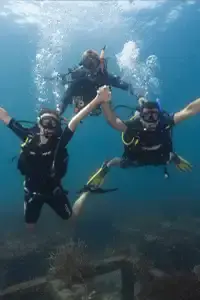
Three days: theory, then confined water drills, then four ocean dives running realistic scenarios. Tired diver tows, unresponsive diver recovery, surface and underwater searches.
This is the version for divers who already hold current CPR and first aid. If you don't, take the React Right & Rescue course instead — it bundles the first aid certification in.
Course structure
Your day-by-day journey
Day 1 — How diving accidents actually develop — rarely one dramatic failure, usually a chain of small ones. Then self-rescue drills: cramps, gas problems, disorientation.
Skills you'll earn
What you'll be able to do
Spotting stress in another diver before it escalates Self-rescue: cramps, gas issues, disorientation Tired and panicked diver assists at the surface